




As India’s Farmer Producer Organisation (FPO) sector crosses 49,800 registered entities, the State of the FPO Sector (SoFPO) 2026 report highlights the growing role of women-led FPOs in building a more inclusive, resilient and commercially viable agricultural ecosystem. The report finds that women-led FPOs demonstrate stronger performance across several indicators of resilience and scalability compared with the national FPO average.
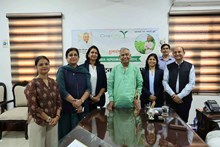
The sixth edition of the report was launched in Delhi today by the National Association for Farmer Producer Organisations (NAFPO), in partnership with NABARD. NAFPO is a not-for-profit multi-stakeholder-owned apex organisation that works to strengthen the FPO ecosystem through institutional development, business stabilisation and inclusive growth.
The SoFPO 2026 is an annual analysis of India’s evolving FPO ecosystem, with this year’s special edition focusing on the International Year of the Woman Farmer. The report includes a dedicated survey of 170 women-led enterprises to examine the scale, resilience and operating environment of FPOs across the country.
Among the key findings, 80 per cent of women-led Farmer Producer Companies (FPCs) have more than 600 members, giving them greater scale and potential for stronger market bargaining. Women-led FPOs also show stronger survival and resilience indicators after incorporation compared with the broader FPO landscape.
Commenting on the findings, Mr. Pravesh Sharma (Retd. IAS), Chairperson, NAFPO Steering Committee and Former MD, SFAC, said, “ SoFPO 2026 comes at a particularly significant moment. Declared the International Year of the Woman Farmer, 2026 provides an opportunity to look at the FPO model through the experience and aspirations of women who constitute a major part of India’s agricultural workforce, yet remain inadequately represented in ownership, raising finance, accessing markets and decision-making. The evidence presented in this report is encouraging: women-led FPOs demonstrate strong collectivisation, organisational commitment and, in several cases, significant improvements in incomes, market access and agency. The report therefore makes an important policy point: women cannot remain beneficiaries of the FPO movement; they must become its owners, decision-makers and entrepreneurs. The transition from SHG member to FPO shareholder and business leader deserves much greater policy attention.”
The growing shift from participation to leadership is also visible at the individual FPO level. Kavita Rahi, Board Director at Chhanvar Agro Farmer Producer Company Limited in Mahokhar, Uttar Pradesh, is among the rural women taking on leadership roles within the FPO ecosystem. The company has 1,280 shareholders and recorded a business turnover of Rs 57.12 lakh in 2026, with total transactions of Rs 1.33 crore. A homemaker-turned-FPO leader, Rahi is part of the company’s efforts to build a profitable and professionally managed farmer enterprise.
She said, “I aspire to take Chhanvar Agro to Rs 20 crore in business and establish it as a leading FPO in India, while encouraging more rural women to take up leadership and entrepreneurship roles. We are very proud and humbled to have reached this stage, and I hope our journey can guide other FPOs that are struggling to become profitable. We have also realised that we cannot do everything ourselves, which is why building a capable team and having the right staff in place is important for the company’s growth. I want Chhanvar Agro to show what a woman and a homemaker can achieve when given the opportunity to lead.”
While the findings point to growing momentum among women-led FPOs, the report cautions that systemic barriers could limit their ability to sustain and scale this progress. Low land ownership among women, estimated at around 13–14 per cent, and limited access to capital continue to constrain their ability to invest, expand operations and access formal finance.
To address these barriers, the report calls for a stronger policy and financial ecosystem for women-led FPOs. Its recommendations include formalising the SHG-to-FPC pathway to build on the success of SHG-led enterprises; moving beyond token representation towards meaningful participation of women in governance and financial decision-making; extending the Section 80PA tax exemption beyond FY 2024-25; developing dedicated credit guarantees and patient capital for women-led FPCs; and creating simpler, vernacular contractual and market safeguards as FPOs increasingly participate in digital and emerging markets.
The report’s findings also point to wider improvements and differences in the operating environment for FPOs. The third edition of the Ease of Doing Business (EODB) Index for FPOs assesses the business environment across 12 states with the highest concentration of FPOs, representing roughly 87 per cent of all FPOs in the country. Maharashtra retains the top position, while Tamil Nadu overtakes Madhya Pradesh to take second place. Uttar Pradesh, Karnataka, Andhra Pradesh and Rajasthan complete the top six, with each scoring above 70.
The findings of SoFPO 2026 signal a shift in India’s FPO landscape, with farmer collectives emerging not merely as instruments of inclusion but as serious agricultural enterprises with the potential to achieve scale and commercial resilience. The report argues that the next phase of India’s FPO ecosystem must focus on converting this momentum into sustained business growth by strengthening women’s access to finance, markets, professional capabilities and decision-making